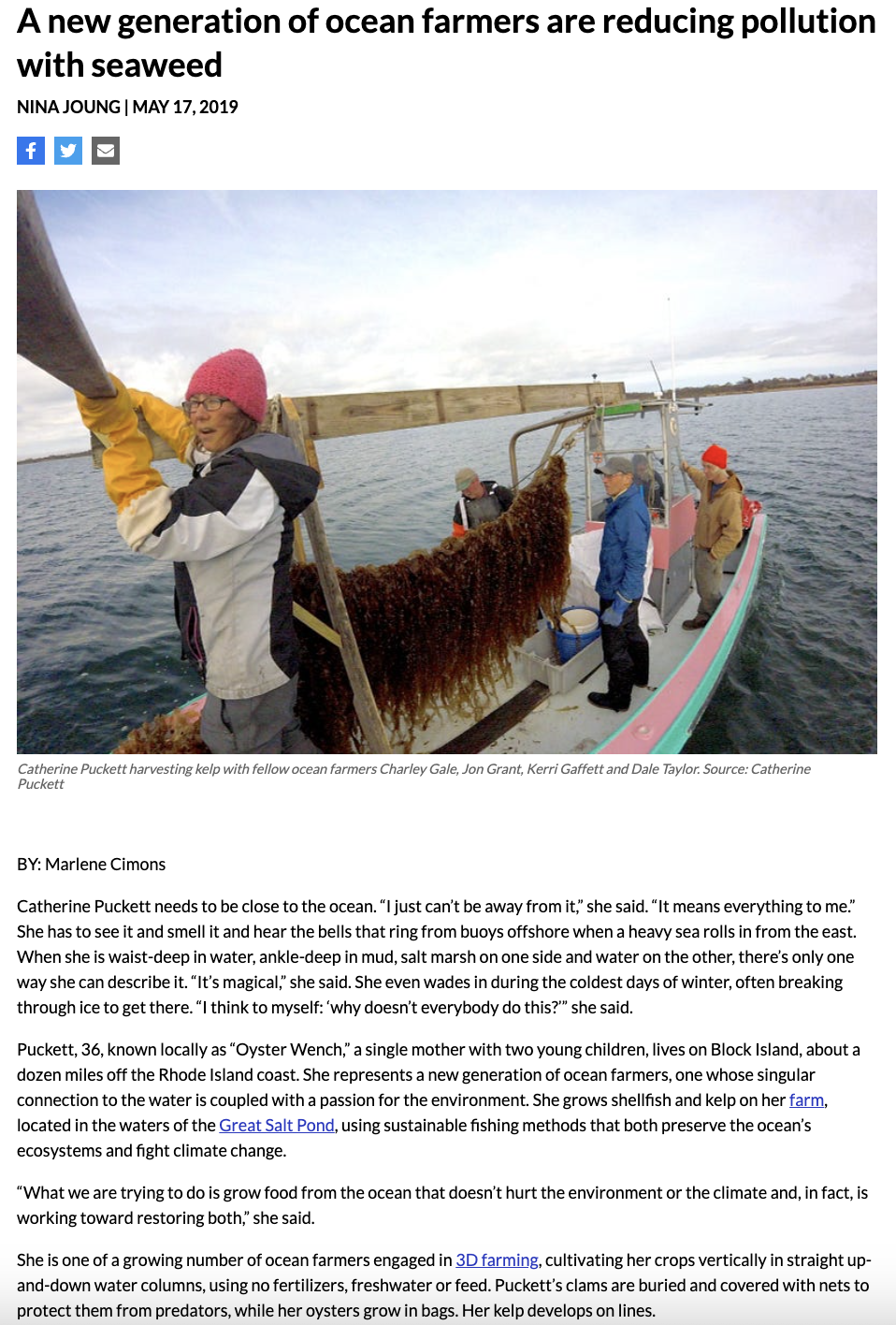
A New Generation of Ocean Farmers are Reducing Pollution with Seaweed

Related Resources

Understanding Blue Carbon
Blue carbon refers to carbon dioxide that is absorbed from the atmosphere and stored in the ocean. “Blue” refers to the watery nature of this storage. The vast majority of blue carbon is carbon di[...]
Kelp Deforestation: Threats to our Underwater Forests
Kelp forests are some of the most dynamic and ecologically productive marine habitats in the world. A root-like system called a holdfast affixes to the rocky seafloor, supporting a long stipe that ext[...]
Marine Pollution Potentially Mitigated by Kelp Farms
Emerging research from the University of Alaska Fairbanks suggests that implementing kelp farms may be an effective strategy for combatting the growing problem of marine pollution. The university stud[...]
Marine Life Cycles
Although at the surface the ocean can appear calm and quiet, in fact there is an enormous amount of life activity taking place, particularly at certain times of the year. [...]
What are El Niño and La Niña?
El Niño and La Niña are climate patterns in the Pacific Ocean that can affect weather worldwide and can also have global impacts on weather, wildfires, ecosystems, and economies. [...]
Why Protecting & Restoring Blue Carbon Ecosystems Matters
Mangroves and seagrass meadows are coastal ecosystems that cover a small portion of the total ocean area but collectively are widely distributed on every continent except Antarctica. Mangroves are fou[...]
Provisioning and Supporting Services of Mangroves
There are a number of tangible products that can be directly utilised and marketed from mangrove forests. [...]
This Interactive Chart Shows Changes in the World’s Top 10 Emitters
A lot has happened since countries met in Paris in 2015 and agreed on an accord to combat climate change. So far, 196 countries ratified or otherwise joined the Paris Climate Agreement, representing m[...]