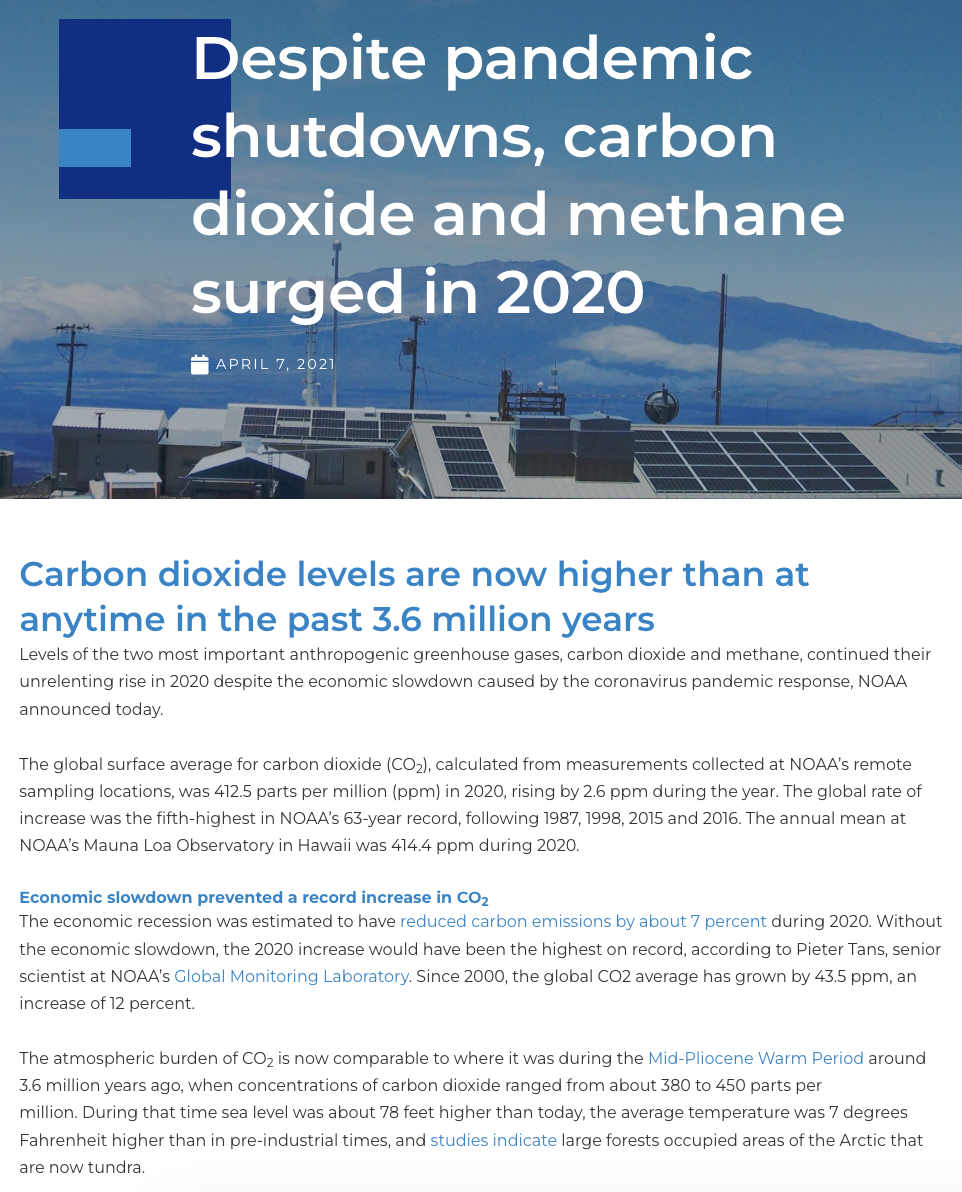
Despite Pandemic Shutdowns, Carbon Dioxide and Methane Surged in 2020

Related Resources

Why Protecting & Restoring Blue Carbon Ecosystems Matters
Mangroves and seagrass meadows are coastal ecosystems that cover a small portion of the total ocean area but collectively are widely distributed on every continent except Antarctica. Mangroves are fou[...]
4 Charts Explain Greenhouse Gas Emissions by Countries and Sectors
Globally, greenhouse gas emissions have grown by 53% from 1990 to 2019. Where are these emissions coming from, and who is responsible? WRI’s Climate Watch platform offers comprehensive emissions dat[...]
A New Generation of Ocean Farmers are Reducing Pollution with Seaweed
Seaweed soaks up carbon and nitrogen, two pollutants lingering in the water. If ocean farmers devoted a little less than 5 percent of U.S. waters to growing seaweed, they could clean up an estimated 1[...]
Protecting Ecosystem Services and Biodiversity
Ecosystem services are the engine of the environment. They are essential to life. Land, water, air, climate and genetic resources must be used responsibly if they are to also benefit future generation[...]
Seagrasses, Nature’s Water Filter
In many systems, vegetated estuarine habitats such as salt marshes and seagrass beds act as a natural water filtration system—where sediment and nutrient-rich water flows in and cleaner water flows [...]
What is Carbon Sequestration?
Carbon sequestration – the practice of removing carbon from the atmosphere and storing it – is one of the many approaches being taken to tackle climate change. Find out why this method is being us[...]
Ecosystems as Fish Factories
The authors’ initial global model of mangrove fisheries was built up front a detailed review of hundreds of studies from around the world, and informed by an expert panel. In terms of natural pr[...]
What are Mangrove Forests?
Mangroves are shrubs and trees that grow in coastal waters. Mangroves are halophytes, meaning they are salt-tolerant trees that thrive in intertidal conditions. These diverse and productive ecosystems[...]