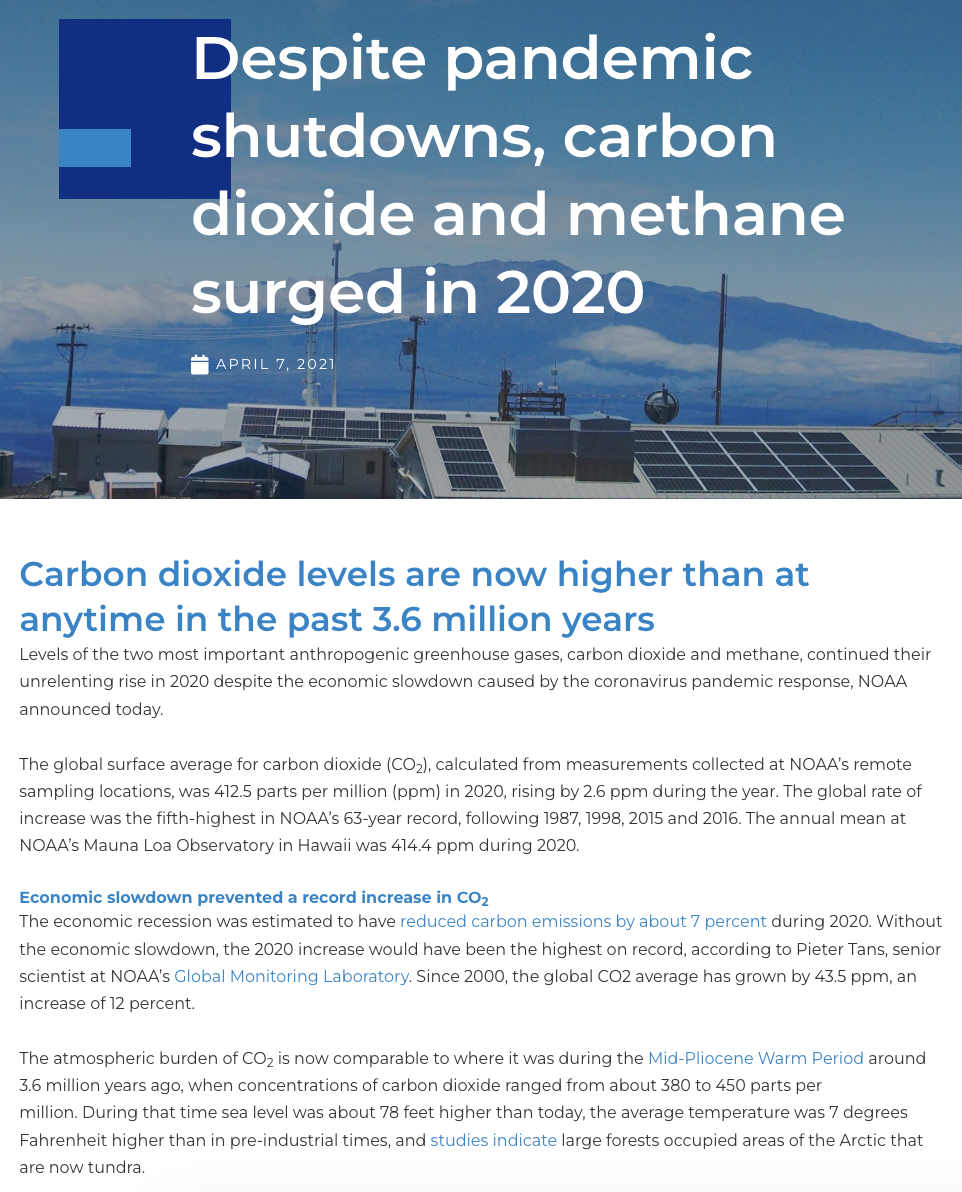
Despite Pandemic Shutdowns, Carbon Dioxide and Methane Surged in 2020

Related Resources

Beyond Plastic Waste
With more than 8 million tons of plastic entering the ocean each year, humanity must urgently rethink the way we make and use plastics, so that they do not become waste in the first place. Cheap, ligh[...]
Why is pH Important?
pH is important for a wide range of industries from aquaculture to wastewater treatments that require an accurate pH reading, especially when it comes down to human safety. [...]
Seagrasses, Nature’s Water Filter
In many systems, vegetated estuarine habitats such as salt marshes and seagrass beds act as a natural water filtration system—where sediment and nutrient-rich water flows in and cleaner water flows [...]
What is Carbon Sequestration?
Carbon sequestration – the practice of removing carbon from the atmosphere and storing it – is one of the many approaches being taken to tackle climate change. Find out why this method is being us[...]
Ocean Acidification
The ocean absorbs about 30% of the carbon dioxide (CO2) that is released in the atmosphere. As levels of atmospheric CO2 increase from human activity such as burning fossil fuels (e.g., car emissions)[...]
4 Charts Explain Greenhouse Gas Emissions by Countries and Sectors
Globally, greenhouse gas emissions have grown by 53% from 1990 to 2019. Where are these emissions coming from, and who is responsible? WRI’s Climate Watch platform offers comprehensive emissions dat[...]
Provisioning and Supporting Services of Mangroves
There are a number of tangible products that can be directly utilised and marketed from mangrove forests. [...]
Ecosystems as Fish Factories
The authors’ initial global model of mangrove fisheries was built up front a detailed review of hundreds of studies from around the world, and informed by an expert panel. In terms of natural pr[...]