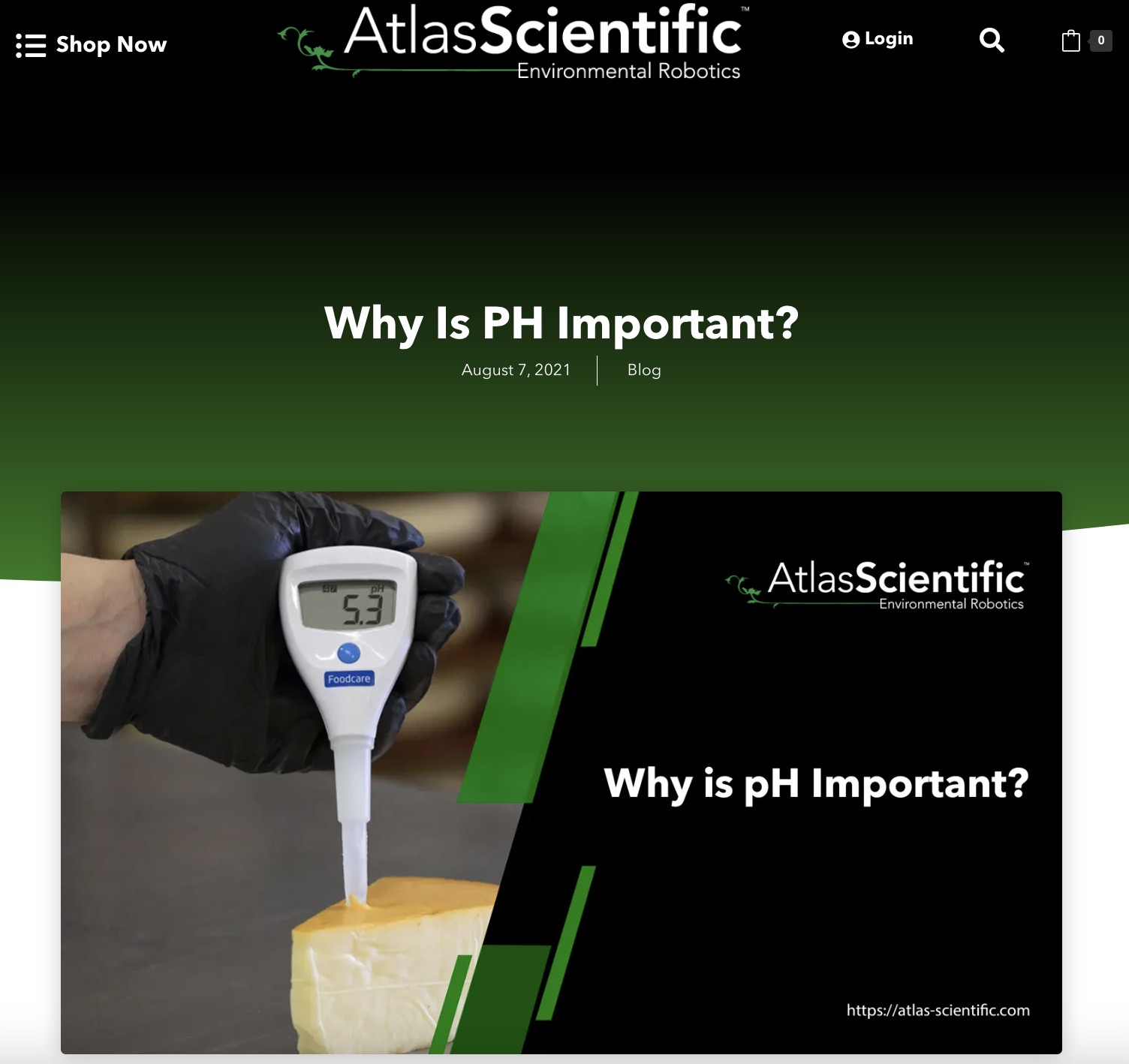
Why is pH Important?

Related Resources

What is Ocean Acidification?
The term ocean acidification is used to describe the ongoing decrease in ocean pH caused by human CO2 emissions, such as the burning of fossil fuels. It is the little known consequence of living in a [...]
5 “Blue Forests” That are Vital to Life on Earth
When you think of a forest, chances are you picture trees rising high above you, leaves crunching underfoot. But there are some very different types of forest – in and under the water – th[...]
What Is Blue Carbon and Why Does It Matter?
Though terrestrial forests typically get most of the attention, they are not the only ecosystems that possess a natural ability to fight climate change. There are three coastal ecosystems that are als[...]
This Interactive Chart Shows Changes in the World’s Top 10 Emitters
A lot has happened since countries met in Paris in 2015 and agreed on an accord to combat climate change. So far, 196 countries ratified or otherwise joined the Paris Climate Agreement, representing m[...]
World’s first underwater climate strike calls for ocean protection
Young Mauritian scientist and climate advocate, Shaama Sandooyea, has held the world’s first ever underwater climate strike at the heart of the Indian Ocean. The protest took place at the Saya de Ma[...]
Seagrasses, Nature’s Water Filter
In many systems, vegetated estuarine habitats such as salt marshes and seagrass beds act as a natural water filtration system—where sediment and nutrient-rich water flows in and cleaner water flows [...]
Kelp Deforestation: Threats to our Underwater Forests
Kelp forests are some of the most dynamic and ecologically productive marine habitats in the world. A root-like system called a holdfast affixes to the rocky seafloor, supporting a long stipe that ext[...]
What are Mangrove Forests?
Mangroves are shrubs and trees that grow in coastal waters. Mangroves are halophytes, meaning they are salt-tolerant trees that thrive in intertidal conditions. These diverse and productive ecosystems[...]