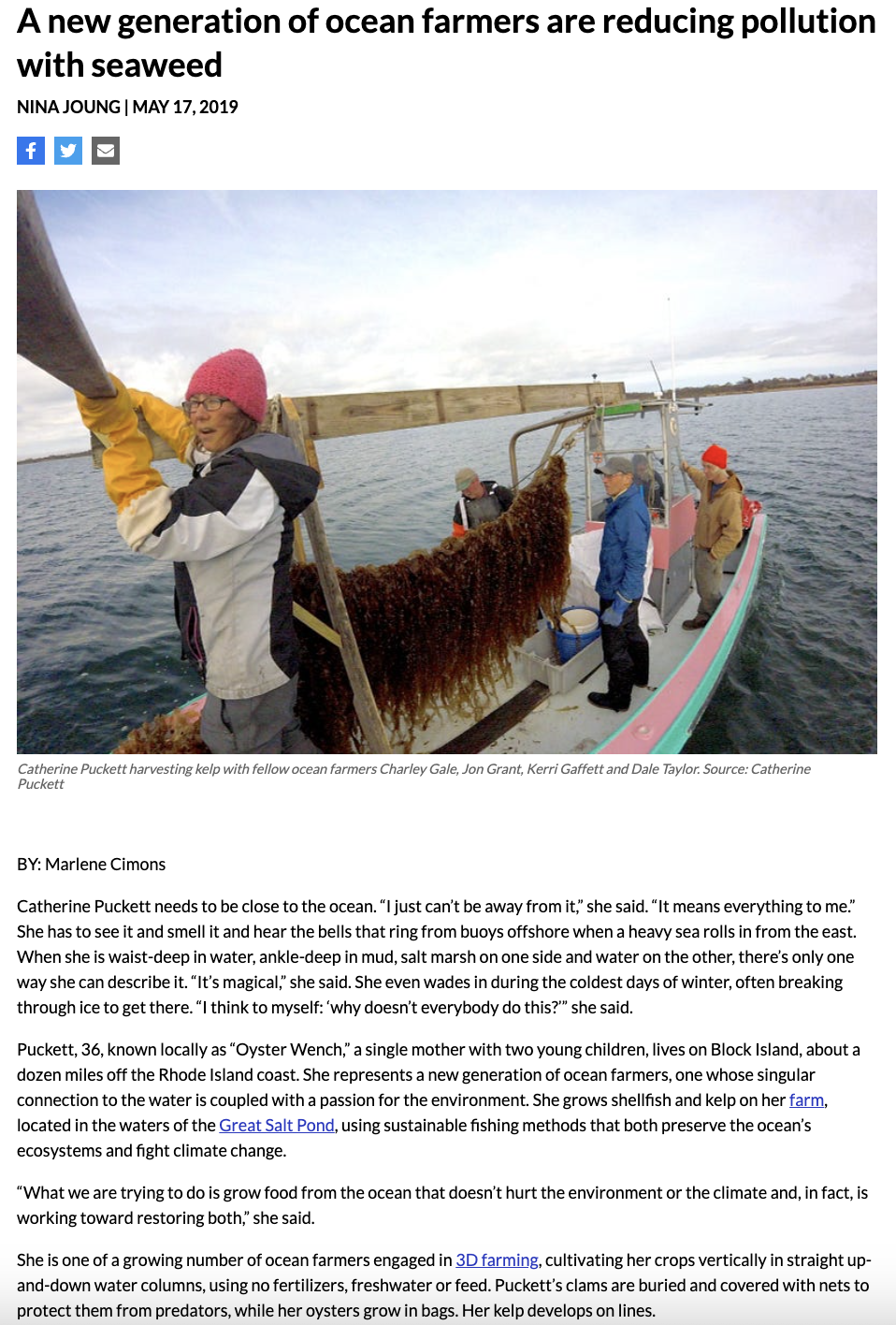
A New Generation of Ocean Farmers are Reducing Pollution with Seaweed

Related Resources

Beyond Plastic Waste
With more than 8 million tons of plastic entering the ocean each year, humanity must urgently rethink the way we make and use plastics, so that they do not become waste in the first place. Cheap, ligh[...]
What are El Niño and La Niña?
El Niño and La Niña are climate patterns in the Pacific Ocean that can affect weather worldwide and can also have global impacts on weather, wildfires, ecosystems, and economies. [...]
Protecting Ecosystem Services and Biodiversity
Ecosystem services are the engine of the environment. They are essential to life. Land, water, air, climate and genetic resources must be used responsibly if they are to also benefit future generation[...]
How Does CO2 Affect pH In Water?
The amount of carbon dioxide (CO2) in a solution is one of the many factors that determines the pH of water. When CO2 levels increase in water, the pH level drops, which makes the water become more ac[...]
Despite Pandemic Shutdowns, Carbon Dioxide and Methane Surged in 2020
Carbon dioxide levels are now higher than at anytime in the past 3.6 million years. Levels of the two most important anthropogenic greenhouse gases, carbon dioxide and methane, continued their unrelen[...]
The Biological Productivity of the Ocean
Productivity fuels life in the ocean, drives its chemical cycles, and lowers atmospheric carbon dioxide. Nutrient uptake and export interact with circulation to yield distinct ocean regimes. [...]
Marine Life Cycles
Although at the surface the ocean can appear calm and quiet, in fact there is an enormous amount of life activity taking place, particularly at certain times of the year. [...]
Marine Pollution Potentially Mitigated by Kelp Farms
Emerging research from the University of Alaska Fairbanks suggests that implementing kelp farms may be an effective strategy for combatting the growing problem of marine pollution. The university stud[...]