Why are Blue Forests Useful?
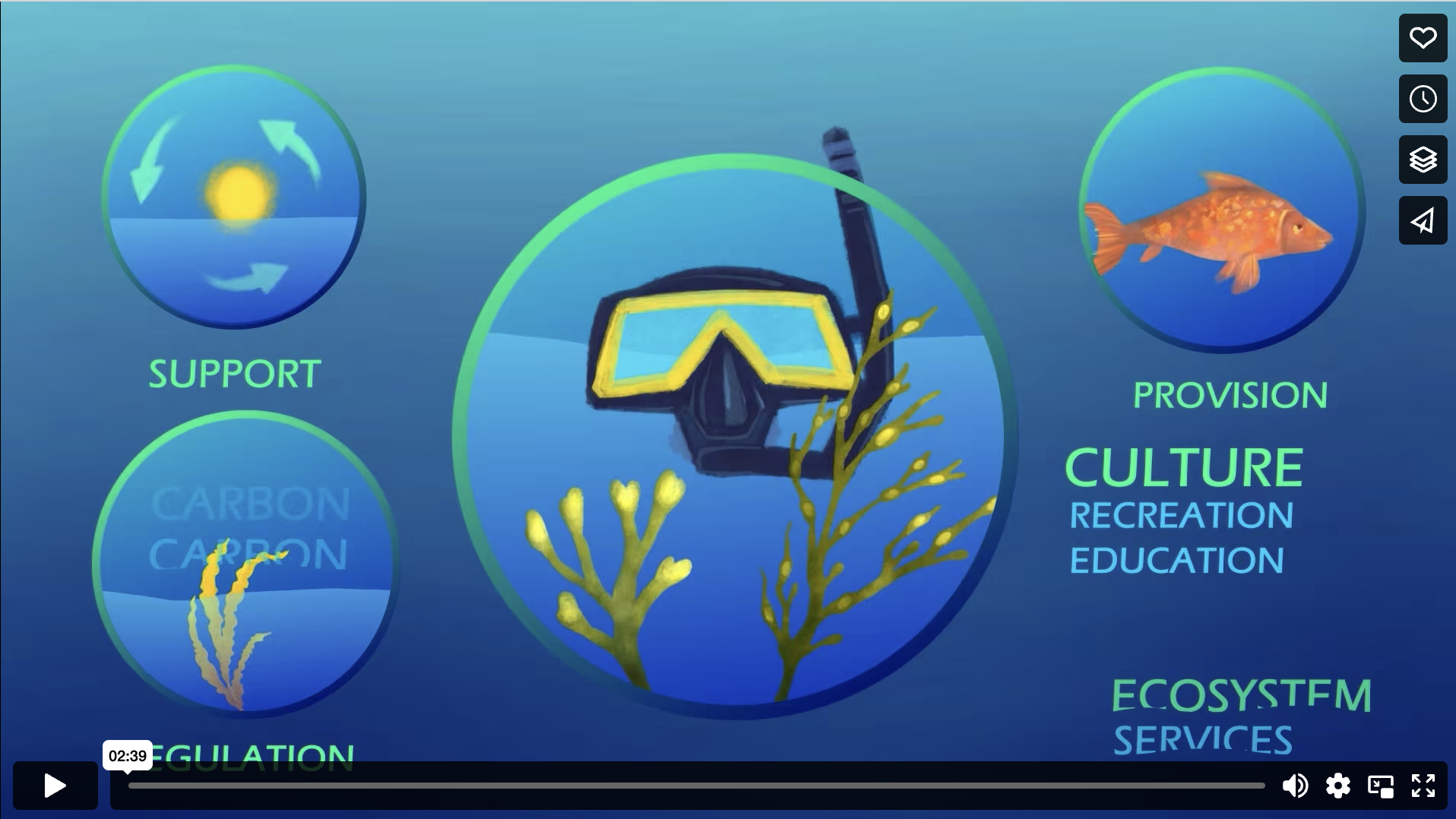
Blue forests provide key ecosystem services like fish nurseries and grazing areas, coastline protection from storms and erosion, carbon storage, and much more. Watch to learn about the many benefits healthy blue forests provide.
Related Resources
Global Mangrove Extent Change 1996–2020: Global Mangrove Watch Version 3.0
Mangroves are a globally important ecosystem that provides a wide range of ecosystem system services, such as carbon capture and storage, coastal protection and fisheries enhancement. Mangroves have s[...]Type: External-link
Estimating Global “Blue Carbon” Emissions from Conversion and Degradation of Vegetated Coastal Ecosystems
Recent attention has focused on the high rates of annual carbon sequestration in vegetated coastal ecosystems – marshes, mangroves, and seagrasses – that may be lost with habitat destruction (R[...]Type: External-link
Long Distance Biotic Dispersal of Tropical Seagrass Seeds by Marine Mega-herbivores
Terrestrial plants use an array of animals as vectors for dispersal, however little is known of biotic dispersal of marine angiosperms such as seagrasses. This study in the Great Barrier Reef confirms[...]Type: External-link
Species Distribution and Habitat Exploitation of Fauna Associated with Kelp (Laminaria Hyperborea) Along the Norwegian Coast
Fauna associated with the common kelp along the Norwegian coast, Laminaria hyperborea, was sampled at four sites covering 1000 km of coastline. Exploitation of the kelp habitat by the fauna, and the[...]Type: External-link